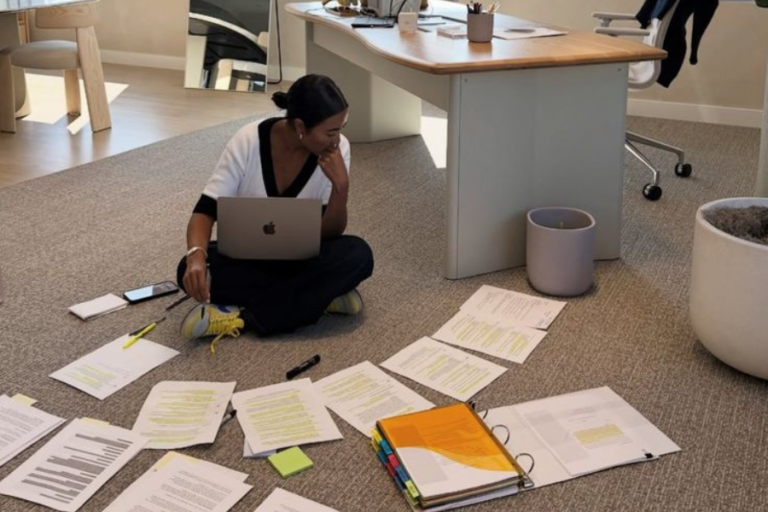

17 Productivity Tips That Will Transform How You Work in 2026

If you’re searching for productivity tips, you want proven strategies to get more done in less time without burning out. The right productivity tips help you eliminate distractions, prioritize what matters, and build systems that support consistent progress toward your goals. Whether you’re overwhelmed by endless to-do lists or struggling to maintain focus throughout the day, implementing science-backed productivity tips can dramatically improve your output while reducing stress.
Modern productivity isn’t about working longer hours—it’s about working smarter. The most successful people don’t have more time than you; they simply use different strategies to maximize their energy and attention. In this comprehensive guide, you’ll discover 17 actionable productivity tips that address the core challenges holding most people back: unclear priorities, digital distractions, poor energy management, and inefficient workflows.
These aren’t generic suggestions—each tip is designed to create measurable improvements in how you work. From neuroscience-based focus techniques to workflow automation strategies, you’ll learn exactly how to implement each productivity tip starting today.
Want to learn more about productivity? Discover our comprehensive guide, “Productivity: The ultimate guide to becoming more productive.” To get it, click here.
Table of Contents
Understanding Why Most Productivity Tips Fail
The Common Mistakes People Make
Most productivity tips fail because they ignore individual work styles and energy patterns. A strategy that works brilliantly for an early-bird engineer might sabotage a night-owl creative professional.
Why generic advice doesn’t work:
- One-size-fits-all approaches ignore your natural rhythms
- Overly complex systems create more work than they eliminate
- Short-term motivation fades without sustainable habits
- Missing the connection between physical health and mental performance
The productivity tips that actually stick share three characteristics: simplicity, flexibility, and alignment with how your brain naturally works.
Read also : 12 Productivity Tips That Actually Work in 2026
The Science Behind Sustainable Productivity
Research in neuroscience reveals that willpower is a finite resource. The most effective productivity tips work with your biology rather than against it.
Your brain operates in 90-minute cycles called ultradian rhythms. Pushing through fatigue depletes cognitive resources faster than strategic breaks restore them. The best productivity tips leverage these natural cycles instead of fighting them.
Get your free E-book
How to become unrecognizable in 6 months
Time Management and Priority Productivity Tips
Start With the Eisenhower Matrix
The Eisenhower Matrix remains one of the most powerful productivity tips for decision-making. This simple framework divides tasks into four quadrants based on urgency and importance.
How to apply it:
- Quadrant 1 (Urgent + Important): Do immediately
- Quadrant 2 (Not Urgent + Important): Schedule these
- Quadrant 3 (Urgent + Not Important): Delegate when possible
- Quadrant 4 (Not Urgent + Not Important): Eliminate
Most people spend too much time in Quadrant 3, mistaking urgency for importance. Shifting focus to Quadrant 2 activities delivers the highest long-term returns.
Time Blocking: Protect Your Deep Work
Time blocking is among the most transformative productivity tips for knowledge workers. Instead of reacting to whatever seems urgent, you proactively assign specific tasks to specific time blocks.
Create themed days or blocks: Admin Monday, Deep Work Tuesday morning, Meetings Wednesday afternoon. This reduces context-switching and mental overhead.
Implementation steps:
- Identify your 3-5 most important weekly outcomes
- Block calendar time for deep work on these priorities
- Treat these blocks as non-negotiable appointments
- Schedule reactive tasks (email, messages) into designated blocks
The Two-Minute Rule for Small Tasks
David Allen’s two-minute rule is one of the simplest yet most effective productivity tips: if a task takes less than two minutes, do it immediately rather than adding it to your list.
This prevents small tasks from accumulating into overwhelming backlogs. Responding to that quick email, filing that document, or making that simple phone call takes less energy when handled immediately than when mentally tracked as pending work.
Focus and Attention Productivity Tips
Deep Work Sessions With the Pomodoro Technique
Among productivity tips for maintaining focus, the Pomodoro Technique offers a structured approach that works with your attention span rather than against it.
The basic framework:
- Work for 25 minutes with complete focus
- Take a 5-minute break
- After four cycles, take a longer 15-30 minute break
During Pomodoro sessions, close all unrelated tabs, silence notifications, and commit fully to one task. This creates intensity that accomplishes more in 25 focused minutes than two hours of distracted work.
Single-Tasking: The Forgotten Productivity Tip
Multitasking is a myth. What we call multitasking is actually rapid task-switching, which reduces efficiency by up to 40% according to research from the American Psychological Association.
The productivity tips that create the best results emphasize single-tasking: giving your complete attention to one activity until completion or until you reach a natural stopping point.
How to practice single-tasking:
- Close all browser tabs except what you need for the current task
- Put your phone in another room during focus sessions
- Use website blockers during designated work periods
- Communicate boundaries to colleagues about interruption-free time
Optimize Your Environment for Focus
Your physical environment dramatically impacts your ability to execute productivity tips effectively. A cluttered desk creates mental clutter.
Create environmental cues that signal focus mode: specific lighting, noise-canceling headphones, or even a designated “deep work” location separate from where you handle email and meetings.
Energy Management Productivity Tips
Align Tasks With Your Energy Levels
The best productivity tips recognize that not all hours are created equal. Your cognitive capacity fluctuates throughout the day based on circadian rhythms.
Energy-based task assignment:
- Peak energy hours: Complex problem-solving, strategic thinking, creative work
- Moderate energy: Routine tasks, meetings, collaboration
- Low energy: Administrative work, organizing, planning
Most people have peak cognitive function 2-4 hours after waking. Scheduling your most important work during this window is one of the highest-leverage productivity tips available.
Strategic Breaks Boost Performance
Taking breaks isn’t procrastination—it’s one of the essential productivity tips backed by neuroscience. Your brain consolidates learning and restores attention during rest periods.
Effective break strategies:
- Physical movement: Even a 2-minute walk improves subsequent focus
- Nature exposure: Looking at plants or going outside reduces mental fatigue
- Complete disconnection: Avoid checking email or scrolling social media
- Mindfulness practices: Brief meditation enhances attention control
The 90-Minute Work Cycle
Working in 90-minute cycles with intentional breaks aligns with your ultradian rhythms. This is one of the productivity tips that prevents the afternoon energy crash many people experience.
After 90 minutes of focused work, take a genuine 15-20 minute break. This rhythm maintains high performance throughout the day rather than depleting willpower in marathon sessions.
Get your free E-book
How to become unrecognizable in 6 months
Digital Workflow Productivity Tips
Inbox Zero Methodology
Email overwhelm sabotages productivity. The Inbox Zero approach is one of the most liberating productivity tips for digital workers.
The system:
- Process email at designated times (not continuously)
- Each message gets one of five actions: Delete, Delegate, Respond, Defer, or Do
- Never use your inbox as a to-do list
- Aim for zero unprocessed messages at the end of each session
This doesn’t mean responding to every email immediately—it means making a conscious decision about each message instead of letting them accumulate into anxiety-inducing backlogs.
Automation and Templates
Creating templates and automating repetitive tasks represents some of the highest-ROI productivity tips available. Time invested in automation pays dividends indefinitely.
What to automate:
- Email responses to frequently asked questions
- Recurring calendar events and reminders
- Data entry and report generation
- File organization and backups
- Social media posting
Tools like Zapier, IFTTT, and built-in automation features in software you already use can reclaim hours each week.
Digital Minimalism for Focus
Among modern productivity tips, digital minimalism addresses the unique challenges of constant connectivity. The average person checks their phone 96 times daily—over 35,000 times yearly.
Implement these boundaries:
- Remove social media apps from your phone
- Disable non-essential notifications
- Use grayscale mode to reduce phone appeal
- Establish phone-free zones and times
Planning and Organization Productivity Tips
Weekly Reviews for Strategic Alignment
The weekly review is one of the most underutilized productivity tips. This dedicated time ensures you’re working on the right things, not just working efficiently on whatever crosses your desk.
Weekly review process:
- Review the past week: What worked? What didn’t?
- Process all inboxes to zero
- Update project lists and next actions
- Review upcoming calendar commitments
- Define your 3-5 most important outcomes for the coming week
This 30-60 minute investment prevents weeks from disappearing into reactive busywork.
The MIT Method: Most Important Tasks
Starting each day by identifying your 1-3 Most Important Tasks (MITs) is among the simplest yet most effective productivity tips for maintaining focus on what matters.
Your MITs are the tasks that, if completed, would make the day a success regardless of what else happens. Everything else is secondary.
MIT selection criteria:
- Moves important projects forward
- Has meaningful deadlines or consequences
- Requires your best energy and focus
- Cannot be delegated
Batching Similar Tasks
Task batching—grouping similar activities together—is one of the productivity tips that dramatically reduces the mental overhead of constant context-switching.
| Task Category | Batching Strategy |
|---|---|
| Process 2-3 times daily at set times | |
| Phone calls | Schedule calling block |
| Content creation | Dedicated creation days |
| Meetings | Cluster on specific days when possible |
| Administrative work | Weekly admin block |
Each context switch costs approximately 20 minutes of focus recovery time. Batching minimizes these transitions.
Habit and System Productivity Tips
Build Keystone Habits
Keystone habits are productivity tips that create cascading positive effects across other areas. The right morning routine, for example, sets the tone for everything that follows.
Powerful keystone habits:
- Morning exercise: Boosts energy, focus, and mood
- Daily planning: Provides clarity and direction
- Consistent sleep schedule: Optimizes cognitive function
- Regular learning: Compounds knowledge and skills
Focus on establishing 1-2 keystone habits rather than overhauling your entire life simultaneously.
The Power of Saying No
Perhaps the most important of all productivity tips: protect your time by saying no to commitments that don’t align with your priorities.
Every yes to something less important is a no to something more important. Successful people aren’t just good at productivity—they’re ruthless about protecting their attention and energy for what truly matters.
How to say no gracefully:
- “I appreciate the opportunity, but I don’t have capacity right now”
- “That’s not aligned with my current priorities”
- “Let me check my commitments and get back to you” (buying decision time)
Continuous Improvement Mindset
The final productivity tip is meta: regularly evaluate and refine your systems. What works today may not work next quarter as your role, responsibilities, or life circumstances change.
Monthly, review which productivity tips are serving you and which have become outdated. Productivity systems should evolve with you, not become rigid constraints.
Get your free E-book
How to become unrecognizable in 6 months
Frequently Asked Questions
What are the most effective productivity tips for beginners?
The most effective productivity tips for beginners focus on fundamentals: start with time blocking to protect deep work sessions, implement the two-minute rule for small tasks, and establish a simple morning routine. These foundational productivity tips create immediate improvements without overwhelming complexity.
How many productivity tips should I implement at once?
Avoid implementing too many productivity tips simultaneously. Choose 2-3 strategies that address your biggest challenges, practice them consistently for 21-30 days until they become habits, then add additional productivity tips. This staged approach prevents overwhelm and ensures lasting change.
Which productivity tips work best for remote workers?
Remote workers benefit most from productivity tips that create structure: dedicated workspace setup, clear work-life boundaries, time blocking for focus sessions, and scheduled breaks. The lack of external structure in remote work makes self-imposed systems critical for maintaining productivity tips that work.
How do I maintain productivity tips long-term?
Maintain productivity tips long-term by building systems instead of relying on motivation. Use habit stacking (attaching new productivity tips to existing routines), environmental design (making desired behaviors easier), and regular weekly reviews to assess what’s working. The best productivity tips become automatic through consistent practice.
Can productivity tips help with work-life balance?
Yes, effective productivity tips improve work-life balance by helping you accomplish more in less time. When you apply productivity tips like time blocking and energy management, you complete important work during designated hours rather than letting tasks bleed into evenings and weekends. Strategic productivity tips create space for life outside work.
What productivity tips work for people with ADHD?
Productivity tips for ADHD should emphasize external structure: visible timers for Pomodoro sessions, written task lists instead of mental tracking, body doubling (working alongside someone), and breaking projects into smallest possible steps. These productivity tips compensate for executive function challenges by creating external support systems.
How do productivity tips differ across industries?
While core productivity tips remain universal, application varies by industry. Creative professionals benefit from productivity tips that protect uninterrupted creation time, while customer service roles need productivity tips for managing interruptions. Adapt these productivity tips to your specific context rather than following rigid prescriptions.
Want to learn more about productivity? Discover our comprehensive guide, “Productivity: The ultimate guide to becoming more productive.” To get it, click here.
Conclusion
Implementing these 17 productivity tips will fundamentally transform how you approach work. The key is starting small—choose 2-3 strategies that resonate with your biggest challenges and commit to practicing them consistently for the next month.
Remember that the best productivity tips aren’t about cramming more into your day. They’re about making conscious choices about where your time, energy, and attention go. By applying these productivity tips, you’ll accomplish more meaningful work while actually reducing stress and overwhelm.
Your next step is simple: review these productivity tips, select the ones that address your specific pain points, and implement them starting tomorrow morning. Track your progress weekly, adjust what isn’t working, and celebrate the wins as you build a productivity system uniquely suited to how you work best.
The difference between where you are now and where you want to be isn’t talent or time—it’s the consistent application of proven productivity tips that align with how your brain naturally works. Start today, and you’ll be amazed at what becomes possible.